Ballajá

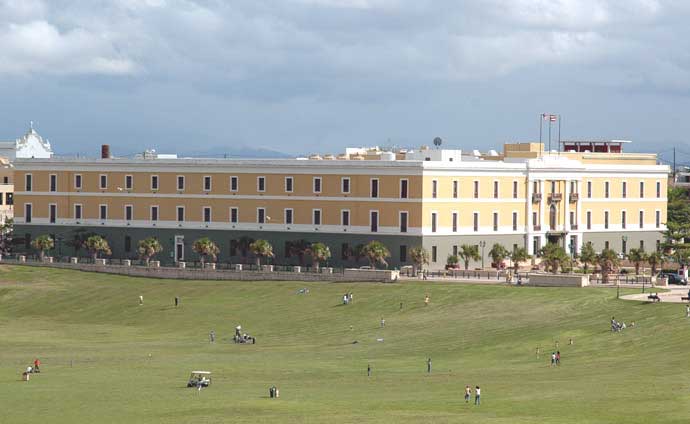
Ballaja from el Morro

In 1976 the government of Puerto Rico acquired the Ballajá Infantry Barracks Building (Antiguo Cuartel de Ballajá) ( 787 721-3737) from the federal government of the United States of America by way of a transfer with a commitment to restore and use the building for cultural, educational and touristic purposes.

In 1986 the restoration of The Barracks began under the "Plan de Reforma Interior de la Zona Histórica de San Juan" (San Juan Interior Historic Zone Restoration Plan). The restoration work was realized from 1990 to 1993. Previously , in 1992 "El Museo de las Américas" (Museum of the Americas, second floor), was founded, with various exhibitions pertaining to the cultural history of Puerto Rico and the Americas.


It is currently home to organizations such as:

First Floor

The dance school, tablao and cultural space Paulette Beauchamp/DanzActiva 787 775 9438
The music school
Fundación Dr. Francisco López Cruz 787 722 4959
The Publishing House Terranova Editores M787 725 7711
The Art, and Paper Store Taller Ballajá

Second Floor

El Museo de las Américas 787 724 5052

Third Floor

The Puerto Rico Academy of the Spanish Language 787 721 6070
The State Office of Historic Conservation 787 721-3737 (the site is currently under revision)

Major events also occur throughout the year such as opera, concerts, festivals and artesans fairs to name a few. Soon we will include more information about the artistic and cultural activities at Ballajá.

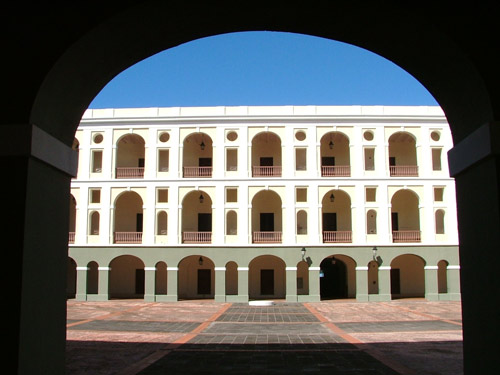
Ballaja interior

The building is on the first list of historical monuments prepared by the distinguished architect Mario J. Buschiazzo in 1955, who describes it as follows::

"It is one of the most important buildings of an era in which Spain defended, at great expense and energy, one it's last domains of the Americas.
.
It occupies a space of 7,700 square meters, on three floors around a vast courtyard."

History of Ballajá
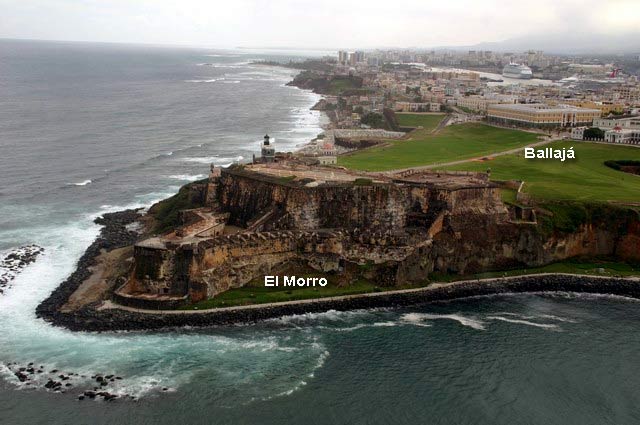
Ballaja and the ocean

El Cuartel de Ballaja (The Ballaja Infantry Barracks Building) was constructed by the Spanish army between 1854 and 1864. The structure is one of the most impressive constructed by Spain in the New World and it stands as the last example of monumental military architecture by the Spanish Monarchy in the Americas.

Located on a lot of approximately three acres between Morovis, Beneficencia and Norzagaray streets, y occupies six city blocks of the Ballaja community (Barrrio Ballaja) that were expropriated and demolished in 1853.

Used until 1898 as infantry barracks and permanent housing for aproximately a thousand soldiers, it consisted of rooms for officers, solders and their families, storage, kitchens, dining rooms, jail cells and stables for horses. The ascending vaulted gothic ceilings above the main staircase are unique in Puerto Rico

On the 12th of May in 1898, during the bombing of San Juan by Admiral William T. Sampson's United State of America naval squadron, the northwest side the Barracks were damaged. After the change of sovereignty the Americans also used the facilities as barracks until 1939. After that date it became the Rodríguez Hospital .

This important historic resource built for military purposes, has evolved with the passage of time becoming a cultural center, rendering tribute to Puerto Rico's rich cultural heritage.

In the future this page will include more information about the history of Ballajá and the surrounding community known historically as Barrio Ballajá (the Ballajá Quarter) where one can find other important cultural spaces such as Liga de Arte de San Juan ( the page is currently under revision), La Escuelas de Artes Plásticas and La Galería Nacional.

El Morro and Ballaja

anuncio - advertisment
Giovanni at DanzActiva